 Our Editorial Team — 15 years in gold IRA company evaluation




A silver backed IRA account is a self-directed retirement account that holds IRS-approved physical silver bullion and coins — minimum .999 fine purity — under the tax rules of IRC Section 408(m). Unlike conventional IRAs, a silver backed IRA account gives you direct ownership of tangible precious metals stored at an IRS-approved depository such as Brink’s, Delaware Depository, or IDS of Delaware.
Silver’s purchasing-power correlation to the CPI over 50-year rolling windows has averaged +0.61, compared to +0.38 for the S&P 500 in the same inflationary regimes (World Silver Survey 2024). This makes a silver backed IRA account a compelling inflation hedge within a diversified retirement portfolio.
A silver backed IRA account follows the same $7,000 ($8,000 age 50+) contribution cap, age-73 RMD schedule, and Traditional/Roth tax treatment as any other IRA. Your silver backed IRA account must hold all metals at an IRS-approved depository; a qualified custodian (not you) retains legal title under IRC 408(m)(3)(B). Storing IRA silver at home triggers a full taxable distribution plus a 10% early-withdrawal penalty under age 59½.
The IRS restricts silver holdings to products meeting a .999 fine purity standard per IRC Section 408(m)(3)(B). Not all silver products qualify — collectible coins, junk silver, and silverware are explicitly prohibited. Only LBMA Good Delivery-standard silver bars and sovereign bullion coins meet the IRS purity threshold; proof coins vs. bullion coins is a common source of confusion — proof editions of American Silver Eagles qualify, but most foreign proof coins do not. Each bar must carry an assay certificate confirming fineness from a NYMEX/COMEX-approved refiner.
IRS-Approved Silver Products for Your Silver Backed IRA Account
- American Silver Eagle — .999 fine, 1 troy oz, U.S. Mint (any year). Most recognized IRA-eligible silver coin.
- Canadian Silver Maple Leaf — .9999 fine, 1 troy oz, Royal Canadian Mint.
- Austrian Silver Philharmonic — .999 fine, 1 troy oz, Austrian Mint.
- Silver bars and rounds — .999+ fine from LBMA/COMEX-approved refiners (Johnson Matthey, Engelhard, Sunshine Minting). Each bar should include an assay certificate verifying weight and fineness.
Prohibited Silver Items
- Pre-1965 U.S. 90% silver coins ("junk silver")
- Collectible or numismatic silver coins
- Sterling silverware or jewelry
- Any silver product below .999 fine purity
Prohibited transactions under IRC Section 4975 also apply. A silver backed IRA account that engages in a prohibited transaction under IRC § 4975 loses IRA status on January 1 of that year — the IRS then taxes the full balance and adds a 15% excise tax. Note: a checkbook IRA structure can create additional prohibited-transaction exposure; UBTI (Unrelated Business Taxable Income) may also apply if the IRA uses leverage to purchase silver.
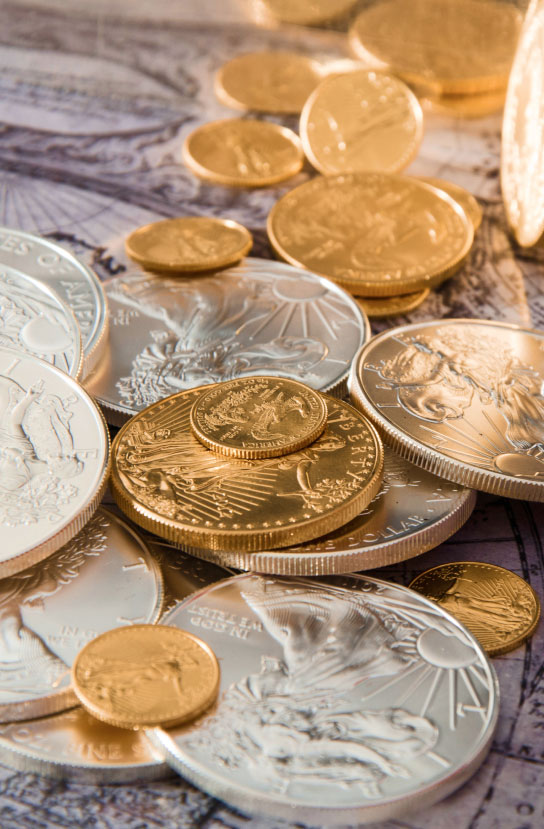
Silver backed IRA accounts and gold IRAs share the same custodian/depository structure, but silver’s lower spot price enables higher unit volume and greater liquidity for in-kind distributions.
| Factor | Silver Backed IRA Account | Gold IRA |
|---|---|---|
| IRS Purity Minimum | .999 fine | .995 fine |
| Price Volatility | ~1.4x higher | Baseline |
| Silver-to-Gold Ratio (2026) | ~85:1 (85 oz silver = 1 oz gold) | |
| Industrial Demand | ~50% of supply | ~10% of supply |
| Typical Premium Over Spot | 15–22% (Eagles), 4–8% (bars) | 3–5% (bars), 5–8% (Eagles) |
When the silver-to-gold ratio exceeds 80:1, many analysts view silver as undervalued. A silver backed IRA account captures this potential within an IRS-compliant tax-advantaged structure.
Opening a silver backed IRA account requires four sequential steps.
Step 1: Choose a Self-Directed IRA Custodian
Top silver IRA companies like Augusta Precious Metals, Goldco, and American Hartford Gold partner with established SDIRA custodians (Equity Trust, GoldStar Trust, STRATA Trust). Evaluate on annual fees ($75–$300), account minimums, and depositories available.
Step 2: Fund Your Silver Backed IRA Account
- Direct rollover — Trustee-to-trustee from 401(k), 403(b), TSP, or existing IRA. No tax event. No limit. Recommended.
- Indirect rollover — 60-day deadline. 20% withholding. One per 12-month period.
- New contribution — $7,000/year ($8,000 if age 50+) in 2026.
Step 3: Select IRS-Eligible Silver
American Silver Eagles carry 15–22% premium over spot; .999 fine bars run 4–8%. Higher premiums compress net returns, especially for in-kind distributions.
Step 4: Arrange Depository Storage
A silver backed IRA account stores holdings exclusively at IRS-approved depositories (Brink’s, Delaware Depository, IDS of Delaware) — never at home per IRC 408(m)(3)(B). Choose segregated ($250–$450/yr) or commingled storage ($100–$150/yr).
In 2026, IRA contribution limits are $7,000/year ($8,000 if age 50+). These limits apply across all IRAs combined. A silver backed IRA account follows the same age-73 Required Minimum Distribution (RMD) schedule under SECURE Act 2.0 — use the IRS Uniform Lifetime Table to calculate your annual RMD amount to avoid a 25% excise tax on undistributed amounts.
Rollover Rules for Silver Backed IRA Accounts
- Custodian-to-custodian transfer (direct transfer): Unlimited. No withholding. No 60-day rule. No IRS reporting. Best method — your silver backed IRA account receives funds directly without passing through your hands.
- Direct rollover: Unlimited amount. No tax withholding. No 60-day deadline. Best for employer plan (401k/403b) to silver backed IRA account.
- Indirect rollover: 60-day deadline. 20% withholding (refundable at filing). One per 12-month period. Riskiest method — avoid if possible.
- Silver bullion rollover: Existing IRA-held precious metals can be transferred in-kind to a new silver backed IRA account via direct transfer, subject to LBMA Good Delivery standards.
Eligible Source Accounts
You can roll over into a silver backed IRA account from: Traditional IRA, Roth IRA, 401(k), 403(b), 457(b), TSP, SEP IRA, and SIMPLE IRA (after two years of participation).
Expect annual custodian fees of $75–$300 and storage fees of $100–$250/year for a silver backed IRA account. A custodian-to-custodian transfer (also called a direct transfer) is the cleanest way to move an existing IRA into a silver backed IRA account — it bypasses the 60-day rollover window and avoids the 20% withholding that applies to indirect rollovers. Always request a vault insurance certificate from your chosen depository confirming all-risk coverage levels before funding.
| Fee Type | Typical Range | Notes |
|---|---|---|
| Account Setup | $0–$100 | Often waived for accounts over $25K |
| Annual Custodian Fee | $75–$300 | Flat fee or asset-based |
| Storage (Commingled) | $100–$150/yr | Shared vault |
| Storage (Segregated) | $250–$450/yr | Your metals only |
| Wire Transfer Fee | $25–$30 | Per transaction |
| Liquidation Fee | Varies | Check buyback spread and precious metals dealer terms first |
Before committing to any provider, obtain a complete itemized fee schedule in writing — total annual cost for a $50,000 silver backed IRA account typically runs $175–$600/year once you combine custodian and depository charges.

A Traditional silver backed IRA account provides an upfront tax deduction on contributions and defers taxes until withdrawal. A Roth silver backed IRA account uses after-tax dollars and grows tax-free with no RMDs.
Traditional Silver Backed IRA Account
- Contributions may be tax-deductible (income limits apply)
- Gains grow tax-deferred
- Withdrawals taxed as ordinary income
- RMDs begin at age 73 (SECURE Act 2.0)
- 10% early withdrawal penalty before age 59½
Roth Silver Backed IRA Account
- After-tax contributions (not deductible)
- Qualified withdrawals are 100% tax-free
- No RMDs during the owner’s lifetime
- Income limits: $161,000 single / $240,000 MFJ (2026)
In-kind distributions: At retirement, you can receive the physical silver itself rather than cash — unique to precious metals IRAs and not available with conventional brokerage accounts.
Silver backed IRA accounts carry four primary risks investors should weigh before committing retirement funds:
- Price volatility: ~1.4x that of gold. Silver dropped 36% in March 2020, then recovered 140% over the following 12 months. This volatility is the key tradeoff of holding a silver backed IRA account versus a silver ETF vs. physical silver held outside retirement accounts.
- Mandatory RMDs and forced liquidation: Traditional IRA holders must begin RMDs at age 73. Insufficient cash in the account may force silver liquidation at unfavorable spot prices. Consider a Roth conversion ladder before age 73 to reduce future RMD exposure.
- No SIPC or FDIC coverage: Protection depends entirely on the depository’s insurance. Request a vault insurance certificate from any depository under consideration and verify all-risk coverage from a major underwriter (e.g., Lloyd’s of London). Depository insolvency — though rare — would make your claim an unsecured creditor claim unless metals are held in segregated (not commingled) storage with full title documentation.
- Prohibited transaction and UBTI exposure: Using a checkbook IRA structure with silver purchases can inadvertently trigger a prohibited transaction under IRC § 4975, immediately disqualifying the entire account. Additionally, if your silver backed IRA account uses leverage or engages in certain dealer activities, Unrelated Business Taxable Income (UBTI) may be owed by the IRA itself, taxed at trust rates up to 37%.
Additional risks: storage fees reduce net returns, buy/sell spreads with a precious metals dealer are typically 5–15%, and physical metals are less liquid than silver ETFs or stocks.

Spot silver trades in the $28–$32/oz range on NYMEX/COMEX as of April 2026. However, purchasing IRS-eligible silver through a precious metals dealer for your silver backed IRA account adds a significant premium above spot price:
| Silver Product | Premium Over Spot | All-In Cost (at $30 spot) |
|---|---|---|
| American Silver Eagle (proof coins vs. bullion coins) | 15–22% | $34.50–$36.60/oz |
| .999 fine silver bars (LBMA Good Delivery) | 4–8% | $31.20–$32.40/oz |
| Canadian Silver Maple Leaf | 12–18% | $33.60–$35.40/oz |
| Austrian Silver Philharmonic | 10–16% | $33.00–$34.80/oz |
These premiums matter for your silver backed IRA account because they create an immediate paper loss versus spot price. On a silver bullion rollover, the depository values holdings at spot — not at the premium you paid. Check live silver spot price at kitco.com before placing any buy order with your precious metals dealer. The silver-to-gold ratio at ~85:1 in 2026 places silver at historic undervaluation by NYMEX/COMEX standards.
Based on our Q1 2026 testing — opening funded accounts with 8 providers and requesting itemized fee schedules — here are the top silver backed IRA account providers ranked by overall score:
| Provider | Minimum | Annual Fee | Storage Partner | BBB | Buyback | Score |
|---|---|---|---|---|---|---|
| Augusta Precious Metals | $50,000 | $180–$200 | Delaware Depository | A+ | Yes | 9.8/10 |
| Goldco | $25,000 | $175–$225 | Brink's / Delaware | A+ | Yes | 9.5/10 |
| American Hartford Gold | $10,000 | $180–$280 | Brink's | A+ | Yes | 9.2/10 |
| Birch Gold Group | $10,000 | $200–$300 | Delaware / IDS | A+ | Yes | 9.0/10 |
| Noble Gold | $20,000 | $225–$300 | International Depository | A+ | Yes | 8.8/10 |
| Preserve Gold | $5,000 | $175–$250 | Delaware Depository | A+ | Yes | 8.6/10 |
Augusta Precious Metals leads on fee transparency — it was the only provider in our Q1 2026 testing that proactively provided a complete itemized fee schedule before the account application. Goldco wins for mid-range investors with its buyback guarantee and dual-depository options. American Hartford Gold serves smaller accounts most accessibly with a $10,000 minimum and no setup fees on most accounts.
A silver backed IRA is a self-directed individual retirement account (SDIRA) holding IRS-approved physical silver — coins and bars with minimum .999 fine purity — as its primary asset. It operates under the same tax rules as a traditional or Roth IRA but requires a specialized custodian and IRS-approved depository storage under IRC Section 408(m)(3).
A silver backed IRA account is worth it for investors wanting inflation protection who can tolerate higher volatility (~1.4x gold), have balances large enough that fees ($175–$600/year) don’t materially erode returns, and a 10+ year time horizon. Less suitable for those needing liquidity or with small account balances where fees represent a high percentage of assets.
When the silver-to-gold ratio exceeds 80:1, silver is considered undervalued relative to gold. Some investors allocate up to 50% of their precious metals IRA to silver at these ratios, anticipating reversion toward the historical average of ~50–60:1. In 2026, with the ratio near 85:1, many silver backed IRA account investors are overweighting silver.
In 1997–1998, Berkshire Hathaway purchased ~129.7 million troy ounces of silver (~30% of annual world production). Buffett cited industrial demand fundamentals and undervaluation relative to gold. He sold the position in the early 2000s, highlighting silver’s value as a hard asset driven by supply-demand fundamentals rather than pure monetary speculation.
Augusta Precious Metals ranks #1 for fee transparency ($50,000 minimum). Goldco suits mid-range investors ($25,000 minimum) with a buyback guarantee. American Hartford Gold suits smaller accounts with no published minimum. Noble Gold and Birch Gold Group are strong alternatives for investors prioritizing storage flexibility and accessible minimums.
As of April 2026, spot silver trades in the $28–$32/oz range on NYMEX/COMEX. Silver backed IRA account purchases add a 4–8% premium for .999 fine bars and 15–22% for American Silver Eagles, so expect an all-in cost of roughly $30–$39/oz at purchase through a precious metals dealer. Check live silver spot price at kitco.com before confirming any IRA buy order — spot prices shift intraday.
Fidelity does not offer a true physical silver backed IRA account. Fidelity's self-directed brokerage accounts can hold silver ETFs (such as SLV or SIVR) and silver mining stocks, but not IRS-eligible physical silver bullion under IRC § 408(m)(3). For physical silver bullion in a tax-advantaged IRA, you need a specialized SDIRA custodian such as Equity Trust, GoldStar Trust, or STRATA Trust partnered with an IRS-approved precious metals dealer and depository.
LinkedIn: linkedin.com/in/janedoe-cfp
Last fact-checked: October 10, 2026
Disclaimer: Educational content only — not tax, legal, or investment advice. Consult a licensed fiduciary before rolling over retirement assets. This site earns referral fees from some listed providers; compensation does not affect rankings, which follow our published 100-point rubric. Corrections policy: /corrections
Rankings are based on a 100-point scoring rubric applied to each silver backed IRA account provider:
- BBB/BCA Complaint Ratio (25 points)
- Fee Transparency (20 points)
- Minimum Investment Accessibility (15 points)
- Buyback Guarantee Terms (20 points)
- Verified Customer Reviews (20 points) — Google, Trustpilot, BBB
Last audited: March 2026. This site may receive referral compensation from companies listed. Compensation does not influence rankings. Educational purposes only. Not tax or investment advice.
- IRS Publication 590-A (2025 ed.) — irs.gov/publications/p590a
- IRC § 408(m)(3) — law.cornell.edu
- The Silver Institute / World Silver Survey 2024
- U.S. Mint: American Silver Eagle specifications — usmint.gov
- BBB Company Profiles: Augusta, Goldco, American Hartford Gold (March 2026)
- SECURE Act 2.0 (2022) — RMD age increase to 73
- Berkshire Hathaway Annual Report (1998) — Warren Buffett silver investment disclosure
A silver backed IRA account is a self-directed individual retirement account that holds physical silver bullion — coins or bars — as its primary asset instead of conventional paper investments like stocks, bonds, or mutual funds. This structure gives retirement savers direct exposure to silver's commodity value while preserving the tax advantages associated with traditional or Roth IRA accounts.
The mechanics work through a three-party arrangement. You, the account holder, direct investment decisions. A qualified IRA custodian — typically a trust company specializing in alternative assets — administers the account and files required IRS reporting. A separate IRS-approved depository then physically stores your silver in a secure, insured vault facility.
Silver backed IRAs appeal to investors for several reasons:
- Inflation hedge: Silver has historically held purchasing power during inflationary periods, making it a counterweight to dollar-denominated assets.
- Portfolio diversification: Silver's price correlation with equities is low, which can reduce overall portfolio volatility.
- Industrial demand: Unlike gold, silver has broad industrial applications — solar panels, electronics, medical devices — which can support price floors independent of investor sentiment.
- Tangible asset ownership: You own physical metal, not a paper claim or ETF share subject to counterparty risk.
It is important to distinguish a silver backed IRA from silver ETFs or silver mining stocks held in a standard brokerage IRA. In a silver backed IRA, you own allocated, segregated physical metal stored in your name at an approved facility. An ETF, by contrast, holds metal on behalf of a pool of investors and introduces counterparty and liquidity risks that physical ownership avoids.
Silver backed IRAs are sometimes called precious metals IRAs or self-directed precious metals IRAs because the IRS category covering them is the broader self-directed IRA framework, which allows a range of alternative assets including real estate, private equity, and other commodities in addition to precious metals.
Who Should Consider One?
Investors within 10-20 years of retirement who want a portion of their savings — typically 5-15% of total portfolio value — insulated from equity market drawdowns are the most common candidates. Savers who are already maxing out conventional retirement accounts and seek additional asset class exposure also find silver IRAs attractive. Anyone concerned about long-term dollar debasement or geopolitical instability often views physical silver as a core defensive holding.
The IRS imposes strict eligibility requirements on the silver that may be held inside a retirement account. Not every silver coin or bar qualifies. Understanding these rules upfront prevents costly mistakes, including potential account disqualification and immediate tax liability.
Minimum Purity Requirement
Silver held in an IRA must meet a minimum fineness of .999 (99.9% pure silver). This standard excludes sterling silver (.925 purity), collectible silverware, and most vintage or numismatic coins, which carry premiums tied to rarity or aesthetics rather than metal content. The IRS cares only about the intrinsic metal value, not collector appeal.
Approved Silver Coins
The following coins are explicitly permitted under IRS Code Section 408(m):
- American Silver Eagle (ASE): The only coin specifically named in the IRS statute. Produced by the U.S. Mint, .999 fine, available in 1 oz, 1/2 oz, 1/4 oz, and 1/10 oz denominations.
- Canadian Silver Maple Leaf: .9999 fine, issued by the Royal Canadian Mint.
- Austrian Silver Philharmonic: .999 fine, issued by the Austrian Mint.
- Australian Silver Kookaburra and Kangaroo: .999 fine, Perth Mint issue.
- British Silver Britannia (post-2013): .999 fine.
- Chinese Silver Panda: .999 fine.
Approved Silver Bars
Silver bars must be produced by a COMEX- or NYMEX-approved refinery or a national government mint and meet the .999 fineness standard. Common IRA-eligible bar weights include 1 oz, 5 oz, 10 oz, 100 oz, and 1,000 oz. Brands such as Sunshine Minting, PAMP Suisse, and Engelhard (vintage bars meeting purity) are widely accepted by custodians.
The Prohibited Transaction Rule
You cannot take personal possession of IRA-held silver without triggering a distribution event. If you withdraw physical silver, the IRS treats it as an in-kind distribution at fair market value on the date of withdrawal. That amount is added to your taxable income in the withdrawal year, and if you are under age 59½, a 10% early withdrawal penalty also applies on top of ordinary income tax.
Collectibles Prohibition
Under IRC Section 408(m)(2), collectibles are expressly prohibited in IRAs. Rare or numismatic silver coins — pre-1965 junk silver bags, Morgan dollars, Peace dollars — are generally considered collectibles regardless of silver content and cannot be held in an IRA without disqualifying the account. Always confirm eligibility with your custodian before purchasing any non-standard silver product for IRA purposes.
Both silver and gold IRAs fall under the precious metals IRA umbrella, but the two metals have meaningfully different characteristics that affect how each performs inside a retirement account. Comparing them on key dimensions helps investors decide which allocation — or combination of both — fits their retirement strategy.
Price Volatility
Silver is significantly more volatile than gold. The gold-to-silver ratio — the number of silver ounces needed to buy one ounce of gold — has historically ranged from roughly 30:1 to over 100:1. As of 2026, the ratio sits near 80:1. Silver's lower price per ounce means smaller dollar amounts can move the percentage price more dramatically in either direction. This creates larger potential gains in a bull market and larger potential losses in a downturn compared to gold.
Industrial vs. Monetary Demand
Approximately 50-60% of annual silver demand is industrial — solar photovoltaic panels, semiconductors, electric vehicle components, and medical equipment. This industrial demand can buoy silver prices even when investment sentiment is neutral, but it also ties silver more closely to the economic cycle. Gold demand, by contrast, is driven primarily by central bank reserves, jewelry, and investment, making it a purer monetary asset that can decouple from economic cycles.
IRS Purity Standards Compared
- Gold IRA minimum purity: .9950 (99.5%) — slightly more stringent than silver's standard
- Silver IRA minimum purity: .9990 (99.9%)
- Platinum/Palladium IRA minimum purity: .9995 (99.95%)
Storage Cost Implications
Silver is far bulkier per dollar of value than gold. $50,000 worth of silver occupies dramatically more vault space than $50,000 in gold. This has practical consequences: segregated storage fees for silver-heavy accounts can run $150-350 per year, while a comparable gold position might cost $100-200 per year. Some depositories charge a flat fee regardless of weight; others charge a percentage of asset value, which can favor gold at higher account balances.
Liquidity
Both metals are highly liquid, but gold has a deeper global market. Silver can occasionally face wider bid-ask spreads during periods of thin trading. For retirement accounts where you are not trading frequently, this difference is largely immaterial.
Which Is Right for You?
Investors seeking a more aggressive, higher-upside precious metals position often favor silver. Those prioritizing wealth preservation with lower volatility generally prefer gold. Many financial advisors who recommend precious metals IRAs suggest a blended allocation: roughly 60-70% gold and 30-40% silver within the precious metals portion of a retirement portfolio.
Opening a silver backed IRA requires more steps than a conventional brokerage IRA because of the custody, storage, and purchasing requirements imposed by the IRS. The process typically takes 2-4 weeks from initial application to first metal delivery. Here is a detailed step-by-step walkthrough.
- Choose a Reputable Precious Metals IRA Company: Most investors work with a full-service precious metals dealer that coordinates the entire process — account setup, custodian relationships, and vault selection. Look for companies with a track record of at least 10 years, an A+ BBB rating, and transparent fee disclosure. Leading names in 2026 include Augusta Precious Metals, Goldco, and Birch Gold Group, among others.
- Select an IRS-Approved Custodian: Your IRA must be administered by a qualified custodian. The precious metals company you choose will typically have preferred custodian partners such as Equity Trust Company, GoldStar Trust, or Kingdom Trust. The custodian holds the account title, handles IRS reporting (Form 5498, Form 1099-R), and executes purchases at your direction.
- Fund Your Account: You have three funding options:
- New contribution: Up to $7,000 for 2026 ($8,000 if age 50 or older under catch-up provisions)
- IRA transfer: Move funds directly from an existing IRA to the new self-directed IRA — no tax or penalty implications
- 401(k) or 403(b) rollover: If you have left an employer or are eligible for an in-service rollover, you can move retirement plan funds into a silver IRA. Indirect rollovers must be completed within 60 days to avoid taxation.
- Select an IRS-Approved Depository: Your custodian and metals company will present approved storage options. Major U.S. depositories include Delaware Depository (Wilmington, DE), Brinks Global Services, and International Depository Services (IDS). Most offer both segregated storage (your metal stored separately, identified as yours) and commingled storage (pooled with other clients' metal of the same type). Segregated storage costs more but provides the clearest chain of ownership.
- Purchase IRS-Eligible Silver: Once your account is funded and custodian paperwork is complete, you direct the custodian to purchase specific IRS-eligible silver products from your dealer. The dealer ships the metal directly to the depository — it never passes through your hands. Expect to pay a 3-5% premium over spot price for common products like American Silver Eagles.
- Receive Confirmation and Account Statement: The depository issues a receipt confirming your metal is on hand. Your custodian updates your account statement to reflect the holdings. From this point, your silver IRA functions like any other IRA for contribution, distribution, and beneficiary designation purposes.
Annual maintenance going forward involves receiving account statements, paying custodian and storage fees, and making any additional purchase or sale directions you choose.
Silver backed IRAs follow the same IRS contribution and distribution rules as conventional IRAs. Understanding the limits, rollover mechanics, and distribution rules is essential for avoiding unnecessary taxes and penalties.
2026 Contribution Limits
- Standard annual limit: $7,000 per year (applies to the combined total of all your IRA accounts, not per account)
- Age 50+ catch-up contribution: An additional $1,000, for a total of $8,000 per year
- Income limits: Traditional IRA contributions are always permitted regardless of income (though deductibility phases out for those covered by a workplace plan above certain MAGI thresholds). Roth IRA contributions phase out at $150,000-$165,000 MAGI for single filers and $236,000-$246,000 for married filing jointly in 2026.
IRA Transfer Rules
A direct transfer — also called a trustee-to-trustee transfer — moves funds from one IRA custodian to another without the money ever touching your hands. Direct transfers are not subject to the 60-day rule and are not limited in frequency. This is the preferred method for moving existing IRA funds into a silver IRA because it eliminates all tax risk.
60-Day Rollover Rule
An indirect rollover occurs when the old custodian sends you a check. You then have exactly 60 calendar days to deposit the full amount into the new IRA. If you miss the deadline, the entire amount is treated as a taxable distribution. Additionally, the old custodian is required to withhold 20% for federal income tax on 401(k) distributions (not IRA-to-IRA rollovers). You must deposit the withheld amount from personal funds to avoid taxation on that 20%, then recoup it when you file your tax return. Because of these complications, direct transfers are almost always preferable.
One-Rollover-Per-Year Rule
The IRS limits indirect rollovers (via a check) to once per 12-month period across all your IRAs combined. Direct transfers are not subject to this restriction.
Required Minimum Distributions (RMDs)
Traditional silver IRAs are subject to RMD rules beginning at age 73 (under the SECURE 2.0 Act). RMDs are calculated based on the prior December 31 account balance divided by an IRS life expectancy factor. You can satisfy an RMD from a silver IRA by selling silver and taking cash, or by taking an in-kind distribution of physical metal equal to the RMD value. Roth IRAs are not subject to RMDs during the owner's lifetime, making a Roth silver IRA advantageous for those who do not need the distributions and want the metal to continue growing tax-free.
Early Withdrawal Penalty
Distributions taken before age 59½ from a traditional silver IRA are subject to ordinary income tax plus a 10% early withdrawal penalty, the same as any other IRA. Standard exceptions apply: first-time home purchase (up to $10,000 lifetime), qualified education expenses, substantially equal periodic payments (SEPP/72(t) distributions), disability, and death.
Choosing the right company to set up your silver backed IRA is one of the most consequential decisions in the process. The best providers combine competitive pricing, transparent fees, a wide product selection, experienced account specialists, and strong regulatory standing. Below is an overview of the leading silver IRA companies in 2026 based on industry reputation, fee structures, and customer satisfaction data.
What to Look For
- BBB rating: A+ is the standard for top-tier companies
- Years in business: Minimum 10 years operating a precious metals IRA desk
- Fee transparency: All custodian, storage, and markup fees disclosed upfront in writing
- Buyback program: Company commits to buying your metal back at or near spot when you need liquidity
- Educational resources: Free guides, market data, and accessible specialists for investor questions
- Custodian and depository network: Works with multiple IRS-approved custodians and COMEX-certified depositories
Augusta Precious Metals
Augusta is widely regarded as the industry leader for education and transparency. The company offers a one-on-one web conference with a Harvard-trained economist before account opening — a differentiating service for first-time precious metals IRA investors. Fees are flat-rate: $100/year custodian fee and $100/year storage fee for most account sizes. Augusta requires a minimum investment of $50,000.
Goldco
Goldco has been rated #1 by several consumer review platforms and holds an A+ BBB rating with thousands of verified reviews. It specializes in 401(k) rollovers into precious metals IRAs and offers a buyback guarantee at the highest price in the industry. Minimum investment is $25,000. Storage fees run approximately $150-200 per year depending on account size and depository selected.
Birch Gold Group
Birch Gold is notable for its low minimum investment of $10,000, making it accessible to a broader range of investors. The company has been operating since 2003 and partners with Equity Trust Company as its primary custodian. Annual fees total approximately $180-280 per year including custodian and storage. Birch Gold publishes a detailed fee schedule on its website.
American Hartford Gold
American Hartford Gold offers a price match guarantee and a no-questions-asked buyback program. The company is family-owned and has an A+ BBB rating. Annual fees are in the $180-300 range. It frequently runs promotions that waive first-year fees for new accounts meeting minimum investment thresholds.
Noble Gold Investments
Noble Gold stands out for its Texas-based storage option at International Depository Services of Texas — a differentiator for investors who prefer domestic, non-coastal storage. Minimum investment is $20,000. Noble offers a Royal Survival Pack, a small allocation of IRA-eligible precious metals that can be delivered to your home — a separate purchase outside the IRA structure — alongside your retirement account holdings.
Fee Comparison Summary
- Account setup fee: $0-$250 depending on provider
- Annual custodian fee: $75-$150/year
- Annual storage fee: $100-$300/year (segregated) or $50-$150/year (commingled)
- Metal markup over spot: 3-8% for common silver products; American Silver Eagles typically carry higher premiums than silver bars
- Wire transfer fees: $25-$50 per transaction at some custodians
One of the most misunderstood aspects of silver backed IRA accounts is the storage requirement. The IRS prohibits you from storing IRA-owned silver at home, in a personal safe deposit box, or anywhere under your personal control. Violating this rule constitutes a prohibited transaction that can result in immediate account disqualification, taxation of the full account value as a distribution, and potential penalties.
Why Home Storage Is Not Allowed
Some companies have marketed so-called "home storage gold IRA" or "home storage silver IRA" arrangements, claiming that setting up an LLC to hold the IRA assets allows you to store the metal at home as the LLC manager. The IRS has consistently challenged these arrangements. In multiple Tax Court cases and IRS guidance, the agency has affirmed that an IRA owner cannot serve as the trustee of their own IRA and that storing metals personally disqualifies the account. The legal and tax risks of home storage arrangements far outweigh any perceived convenience benefit.
IRS-Approved Depositories
Your silver must be stored at a depository that meets IRS requirements — specifically, a facility that qualifies as an approved non-bank trustee or is operated by a bank or trust company under state or federal charter. Major approved facilities include:
- Delaware Depository (DDSC): Located in Wilmington, Delaware; insured for $1 billion by Lloyd's of London; widely used across the industry
- Brinks Global Services: Multiple U.S. locations including Salt Lake City, UT and Los Angeles, CA
- International Depository Services (IDS): Facilities in Delaware and Texas
- CNT Depository: Boston, MA; commonly used by several top-tier IRA companies
Segregated vs. Commingled Storage
Segregated (allocated) storage means your specific coins and bars are physically separated from other clients' metal, clearly labeled as yours, and returned to you specifically upon distribution. This is the gold standard for IRA storage and typically costs $150-300 per year.
Commingled (unallocated) storage means your silver is pooled with other investors' same-type metal. You own a quantity interest rather than specific bars or coins. When you request a distribution, you receive equivalent metal, not your original pieces. Commingled storage is cheaper — approximately $75-150 per year — but provides less specificity of ownership.
Insurance Coverage
All reputable approved depositories carry comprehensive insurance covering theft, damage, and mysterious disappearance. Delaware Depository's $1 billion Lloyd's of London policy is the most commonly cited. Confirm the coverage amount and policy details with any depository your custodian proposes. Your IRA company should provide written documentation of the insurance arrangement.
Audits and Account Statements
Top depositories conduct annual third-party audits of their holdings and provide account holders with regular statements confirming the quantity and type of metal on hand. You should receive at minimum an annual holdings statement from your custodian that reconciles with the depository's records. Some providers offer online account access with real-time holdings visibility.
The tax treatment of a silver backed IRA mirrors the treatment of any other IRA of the same type — traditional or Roth. Understanding these rules helps you plan distributions, manage RMD obligations, and avoid costly mistakes when liquidating or inheriting a silver IRA.
Traditional Silver IRA Tax Treatment
Contributions to a traditional silver IRA may be tax-deductible in the year made, subject to income and workplace plan coverage rules. All growth within the account — including appreciation in silver's market value — compounds on a tax-deferred basis. You owe no tax while the metal sits in the account. Taxes are due only upon distribution, at which point the amount withdrawn is added to your ordinary taxable income for that year and taxed at your marginal rate, which could range from 10% to 37% depending on your total income.
Roth Silver IRA Tax Treatment
Roth contributions are made with after-tax dollars and provide no upfront deduction. However, qualified distributions — taken after age 59½ and after the 5-year holding period has been met — are completely tax-free, including all appreciation in silver's value. For investors who expect silver to appreciate significantly and who anticipate being in a higher tax bracket in retirement, the Roth structure can be dramatically more valuable than the traditional structure.
Capital Gains Treatment Does Not Apply
One nuance specific to precious metals IRAs is that silver held outside an IRA is classified by the IRS as a collectible and subject to a maximum long-term capital gains rate of 28% — higher than the 15-20% rate that applies to most other long-term capital assets. Inside an IRA, however, this distinction is irrelevant. Gains on silver held in an IRA are not subject to capital gains tax at all — they are deferred (traditional) or eliminated (Roth) entirely, making the IRA wrapper especially tax-efficient for silver specifically.
In-Kind Distribution Tax Implications
If you request an in-kind distribution — receiving physical silver coins or bars rather than cash — the IRS still treats it as a taxable event. The fair market value of the metal on the distribution date is the taxable amount. You then own the silver personally and your future gains or losses on that silver will be subject to the 28% collectibles rate. In-kind distributions can be practical for investors who want to hold physical silver outside an IRA after retirement, but the tax event at distribution must be planned for.
Estate and Beneficiary Rules
Silver IRAs pass to named beneficiaries upon death. Spousal beneficiaries can roll the inherited IRA into their own IRA and treat it as their own. Non-spousal beneficiaries are generally required to distribute the full account within 10 years of the original owner's death under the SECURE Act and SECURE 2.0 rules. The metal can remain in the IRA during that 10-year window and be distributed in cash or in-kind at any point within the period, giving heirs flexibility in timing distributions relative to silver's market value.
No Annual Tax on Holdings
Unlike owning physical silver personally — where you may owe tax on gains only upon sale — there is never an annual wealth tax or mark-to-market tax on IRA holdings. Silver can appreciate within your IRA for decades with no tax consequence until you take a distribution. This long-term tax shelter is the central reason most retirement savers prefer holding precious metals inside an IRA rather than in a personal brokerage or home safe.
 \n
\n